
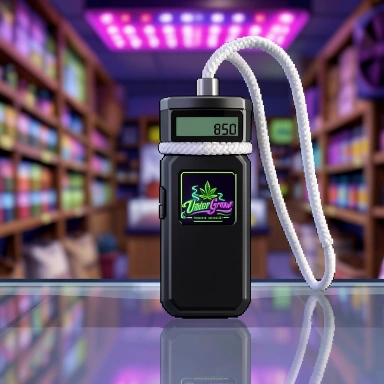
What it measures
Not all light is equally useful: plants use the light from blue to red, called "par" (photosynthetically active radiation). The meter counts how much of that light hits each point of the leaf per second: it is called PPFD and is measured in µmol/m²/s.
Why a lux meter doesn't work
Lux measures light the way the human eye sees it, and we see green very well. Plants mainly use blue and red. With purple LED lamps, a lux meter can read low even though there is plenty of useful light.
Reference values
Seedlings and clones: 100 to 300.
Vegetative: 300 to 600.
Flowering: 600 to 900 (up to 1.000-1.200 if CO2 is added to the air).
Summer sun at noon goes over 1.500. Too much light near the lamp bleaches the tips (light burn).
How to use
You measure at the height of the tops in several spots (the center always gets more than the edges) and raise or lower the lamp until it is even and within the range for the stage.
▲ Pros
- Warns you before light and heat burn the tips
🎮 Practice it in UnderGrow
Costs US$ 45 at shop › gear. Shows the light the plant gets and warns you when, in flowering, the lamp is low and it's over 28 °C: that's when you should raise the lamp (tap light, in climate › raise the lamp).
▶ Play free