
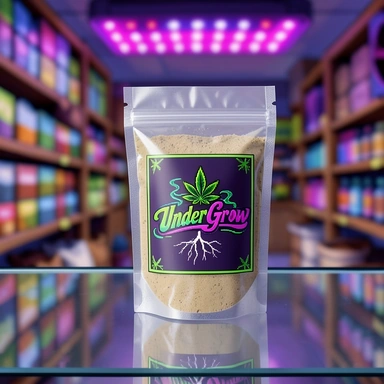
What they are
Mycorrhizae are fungi that live attached to the root, in partnership with the plant: most plants in the world have them in nature. Trichoderma is another good fungus, living in the soil around the root.
How they work
Mycorrhizae stretch very fine threads (hyphae) much farther than the root. It's as if the root got bigger: it reaches more water and more nutrients, especially phosphorus. In exchange, the plant gives them sugars. That's why the plant handles dry days better.
Trichoderma takes up the space around the root and attacks the bad fungi (like pythium and fusarium, which rot roots). It's a guard.
How to use them
They go in at the start, in contact with the root: when sowing, transplanting or planting a clone, dusting the powder into the hole where the root goes. They take days or weeks to colonize it.
They're living things: they die if the soil dries out completely, with fungicides and with lots of chemical fertilizer (especially lots of phosphorus, which makes the plant stop needing them). In hydroponics, trichoderma or good bacteria are used more, to protect the root.
What they don't do
They're not fertilizer or a miracle: they help a well-cared-for plant get a little more and suffer less. If the plant has other problems, they don't fix them.
▲ Pros
- More grams at harvest
- Half the stress with dry or soggy soil
- In hydroponics, the root doesn't rot
▼ Cons
- Only goes in when the plant starts
🎮 Practice it in UnderGrow
It's called living roots and it's an optional add-on (shop › add-ons). It only goes in when the plant starts (up to 7 game days, 7 real h) and takes hold little by little over 7 game days (7 real h). It gives +5 % grams, half the stress with dry or soggy soil and, in hydroponics, prevents root rot. It dies if the soil stays bone dry for 48 game h in a row (2 real h).
▶ Play free