
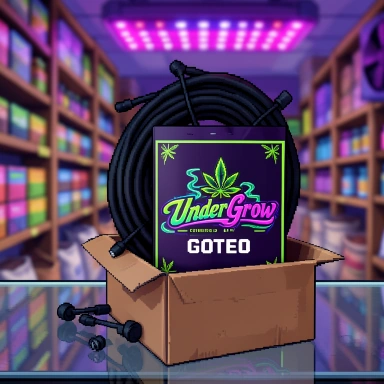
What it is
A network of hoses with emitters: tiny parts that let water out drop by drop, always the same amount (for example, 2 or 4 liters per hour). A timer or a sensor opens the water on a schedule. It is the watering of big grows, indoors and outdoors.
Pros
It waters hundreds of plants equally, with no labor. Water goes straight to the root, without wetting the leaves (less fungus) and without waste: it saves up to half the water compared to watering with a hose.
The classic problem
Emitters get clogged: with scale from hard water, with fertilizer residue or with algae. A plant with a clogged emitter dries out while the ones next to it are perfect, and you notice late. That is why you put a filter at the inlet, flush the hoses every now and then and check emitter by emitter.
With fertilizer
Many systems mix the fertilizer in the tank (fertigation). It is convenient, but it clogs the emitters more and you have to monitor the tank's EC and pH.
▲ Pros
- Waters the garden plants by itself
▼ Cons
- Drippers that clog
- The tank runs out: you have to refill it
🎮 Practice it in UnderGrow
The drip is for the garden: you pay for it once and it comes with its own 200 l tank. You have to refill it, but it can carry fertilizer and corrected pH (fertigation). It waters when the water bar drops to half and leaves it well watered (less for seedlings, so as not to drown them). Drippers clog: the magnifier finds and unclogs them. In the warehouses and the field, watering the batches is the waterer's job (an employee), as in real large grows, where someone has to look after the fertigation.
▶ Play free